EICU – Engine Interface Control Unit
EICU က Engine Control System နဲ့ External System တို့ကို ဆက်သွယ်တာကို တာဝန်ယူပါတယ်။ EICU က EICU A နဲ့ EICU B ဆိုပြီး နှစ်ခု တပ်ဆင်ထားပါတယ်။ တစ်ခု ပျက်ခဲ့ရင် နောက်တစ်ခုက redundancy အနေနဲ့ရှိနေမှာပါ။ Engine Remote Control System၊ Telegraph၊ Engine Safety System နဲ့ ချိတ်ထားပြီး Engine rpm command / speed set, Engine Load Program တွေကို EICU က ထိန်းချုပ်ပြီး ဆောင်ရွက်ပါတယ်။ Operator က ပေးတဲ့ Speed Command က EICU ဆီရောက်ပါတယ်။ EICU က အဲဒီ Speed set point ကို တန်းမသွားစေဘဲ Engine ကို မထိ ခိုက်အောင် တွက်ချက်ပေးတဲ့ Algorithm တွေနဲ့ Process အရင်လုပ်ပါတယ်။ ဥပမာ Barred speed protection, load up program စတာတွေပါ။ အဲ့ဒီကနေ ရလာတဲ့ Processed Speed Set Point ကို ECU ဆီ ပေးပြီး လိုချင် တဲ့ desired rpm setpoint ကို သွားတာပါ။

ECU – Engine Control Unit
သူကလည်း EICU လို unit ၂ ခု ပါရှိပါတယ်။ Main ရယ် redundancy ပါ။ သူရဲ့ အဓိက တာဝန်က Governor အလုပ် လုပ်တာပါ။ EICU ကပေးလိုက်တဲ့ processed speed set point ကို ရဖို့ Fuel index ကို သူက တွက်ထုတ်တာပါ။ ပြီးတော့ NOx mode, ECO mode စတာတွေအတွက် fuel injection timing နဲ့ exhaust valve timing တို့အပြင် cylinder lubrication rate ကိုပါ တွက်ထုတ်ပြီး CCU ကို လှမ်းပေးပါတယ်။ Main Starting Air Valve ရဲ့ Pilot Valve ကိုလည်း ECU က အဖွင့်အပိတ် လုပ်ပေးပါတယ်။ ပုံမှန် engine driven hydraulic pump သုံးလုံးဆိုရင် ACU (auxiliary control unit) MPC က control လုပ်ပေမယ့် တချို့ Engine အကြီးတွေမှာ engine driven hydraulic pump ငါးလုံးပါလာရင် no.4 နဲ့ no.5 ကို ECU ကတ်တွေ က တာဝန်ယူ ပါတယ်။ အဲ့ဒီလိုမျိုး ဆိုရင် ECU က ယူနစ်နှစ်ခုပါပေမယ့် redundancy မရတော့ပါဘူး။
CCU- Cylinder Control Unit
Cylinder control unit က cylinder unit တစ်ခုကို ကတ် တစ်ခု စီ ရှိပြီးတော့ redundancy မရှိပါဘူး။ CCU အတွက် ရှေ့မှာ ဆိုခဲ့သလို တခါတလေ MPC အစား MPC-10 ကို သုံးတာရှိပါတယ်။ အဲဒီလိုမျိုးဆို သင်္ဘောမှာ MPC card အသစ် အပြင် MPC-10 ကတ် ပါ အသစ် တစ်ခု ပါ ရှိထားသင့်ပါတယ်။
CCU က cylinder unit တစ်ခုစီရဲ့ Hydraulic Control Unit (HCU) ကို control လုပ်ပေးပါတယ်။ HCU က cylinder တစ်ခုချင်းဆီရဲ့ Fuel injection၊ Exhaust valve acutation၊ cylinder lubrication စတာတွေ အတွက် Hydraulic control assembly ပါ။ နောက်ပိုင်း ဆက်ရှင်းပါ့မယ်။
CCU က Tacho System က နေ crank angle position ကို ရယူပါတယ်။ အဲဒါကိုမူတည်ပြီး သက်ဆိုင်ရာ ယူနစ်တွေရဲ့ Fuel injection ၊ exhaust valve actuation တို့ကို လုပ်ဆောင်တာပါ။
ECU ကနေ Injection Profile Command ကို CCU တွေဆီ ပို့လိုက်ပါတယ်။ CCU က ရလာတဲ့ command အတိုင်း သက်ဆိုင်ရာ ယူနစ်အသီးသီးရဲ့ Fuel injection လုပ်ရမယ့် crank angle ရောက်တဲ့အခါ Fuel Oil Pressure Booster ကနေ Fuel Injection စပါတယ်။ Fuel flow ကို Fuel booster unit ရဲ့ Hydraulic piston actuator ကို ELFI (Electronic Fuel Injection) Proportional valve ကနေ control လုပ်ပြီး ထိန်းချုပ်ပါတယ်။
ME-C Engine တွေမှာ Exhaust valve opening and closing ကို ECU က ပေးတဲ့ Crank angle position မှာ ELVA (Exhaust Valve Actuation) ကနေ On/Off control လုပ်ဆောင်ပါတယ်။ ELFI နဲ့ ELVA ဆိုပြီး valve နှစ်ခု ပါတာ ရှိသလို FIVA ( Fuel Injection Valve Actuation ) ဆိုပြီး တစ်ခုတည်းက Function နှစ်မျိုးလုံး လုပ်တာလည်း ရှိပါတယ်။ ME-B တွေမှာတော့ Fuel injection အတွက် ELFI သာ ပါပြီး Exhaust valve actuation ကို MC Engine တွေလိုပဲ cam shaft ကနေ တဆင့် လုပ်ပါတယ်။
ME-C engine က MC engine တွေလို Starting Air Distributor မပါတော့ ပါဘူး။ CCU တွေက သက်ဆိုင်ရာ Cylinder unit တစ်ခုချင်းဆီမှာ ရှိတဲ့ Air Starting Valve တွေရဲ့ Pilot Valve တွေကို Firing order နဲ့ Fwd./rev sequence အတိုင်း ဖွင့်ပေးပါတယ်။
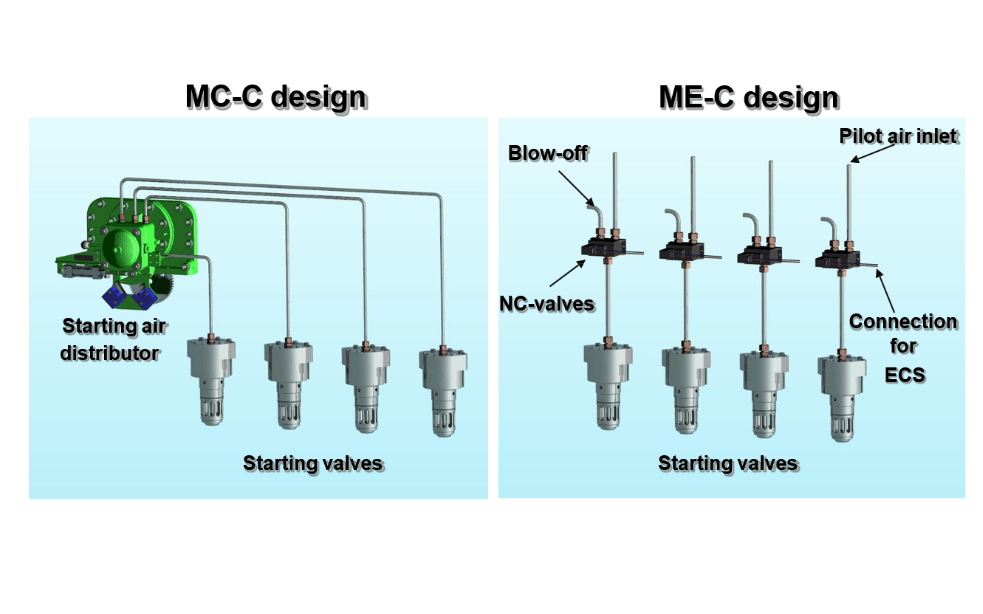


ရှေ့မှာဆိုခဲ့သလို CCU က cylinder unit တစ်ခု ကို ကတ် တစ်ခု ဆီ ရှိပြီး redundancy မရှိတဲ့အတွက် ကတ် ပျက်ခဲ့ရင် fuel ကျွေးတာ၊ Exhaust valve ဖွင့်ပိတ် လုပ်တာ တို့ရပ်သွားပြီး အဲဒီ ကတ် တာဝန်ယူထားတဲ့ cylinder unit က out of operation ဖြစ်ပြီး Engine ကို slow down ဖြစ်စေမှာပါ။
CCU နဲ့ ပတ်သက်ပြီး အရေးကြီးတာတစ်ခုက cylinder lubrication ပါ။ Cylinder lubricator solenoid valve က HCU (Hydraulic Control Unit) မှာ တွဲလျက်ရှိပါတယ်။ပုံမှန် အခြေအနေမှာ ECU က Sulphur content in Fuel ၊ Feedr rate factor ၊ Minimum Feed rate စတာတွေပေါ်မူတည်ပြီး cylinder lubrication rate ကို CCU ဆီပို့ပေးပါတယ်။ CCU က Lubricator solenoid ကို on/off frequency ကစားပြီး Feed rateကို ထိန်းချုပ်ပါတယ်။ တကယ်လို့ CCU ကတ် က ပျက်မယ်၊ အကြောင်းတစ်ခုခုကြောင့် ကတ် ကို ချက်ချင်းလဲလို့ အဆင်မပြေသေးဘူး ဆိုတဲ့အချိန်မှာ Cylinder lubrication ပါ ငတ်နေပြီး အခြေအနေပိုဆိုးသွားမှာပါ။ ဒီလိုမျိုး ဖြစ်လာခဲ့ရင် emergency lubrication အတွက် emergency lubrication cable တစ်ခု ပေးထားပါတယ်။ ECU A (သို့) ECU B တို့ရဲ့ plug 52 နဲ့ lubricator Solenoid ကို ချိတ်ရမှာပါ။ အဲဒီလို ချိတ်ပြီးနောက် ECU ကနေ lubricator ကို random timing တစ်ခုနဲ့ lubrication ပေးနေမှာပါ။အရေးပေါ်အချိန် မှာ အလွယ်တကူ လုပ်လို့ရအောင်emergency lubrication cable ကို သတ်မှတ်နေရာတစ်ခုမှာ သိမ်းထားပြီး မှတ်ထား သင့် ပါတယ်။


ကျန် MPC အကြောာင်းတွေကို အပိုင်း (၃) မှာ ဆက်သွား ပါ့ မယ်။
References
1) Hyundai-Man B&W Diesel Engine Main Engine Manual Volume II
2) MAN Diesel PrimServ Academy
(This overview of ME Engine Control Systems is intended solely for educational purposes and knowledge sharing. It is not designed for commercial publication or professional use. The information provided aims to offer a general introduction to ME Engine Control Systems for those unfamiliar with the topic.
Please be aware that this overview is based on specific ME engines encountered and reflects current technology as of the date of writing. Due to the evolving nature of technology, there may be gaps, discrepancies, or inaccuracies in the information presented.
For the most accurate and up-to-date information, further research and consultation with industry experts are recommended. Corrections, additional insights, and feedback from the community are welcome to enhance the accuracy and usefulness of this material.)
 ETO Insights
Leave a comment