The Rudder Angle Indicator problem on this vessel has been ongoing since the beginning of this year, and it was handed over from other management. I have been aware of it since I signed on, and it only was solved before I signed off.
Actually, it was not a particularly difficult issue. If given a day or two and the necessary permissions, it should be resolved. The prolonged nature of the issue has been due to the short voyages and very frequent port and manoeuvring operations, which have delayed finding a solution.
There are two main issues with the rudder/steering control: one is that the hand steering/follow-up mode shows increasing error. For instance, if a 5-degree command is given, the rudder moves about 5.2 degrees, and a 20-degree command results in about 22 degrees. The second problem is that the Rudder Angle Indicators do not show more than 35 degrees; both port and starboard sides only show around 33 degrees.
It’s not clear which issue came first, but I believe that the hand steering misalignment occurred after attempts were made to adjust it without realising that the rudder angle indicator was showing incorrectly.
The Steering Control System and Rudder Angle Indicator System are separate systems. The follow-up and autopilot use a separate feedback unit, while the Rudder Angle Indicator uses a separate synchro generator feedback system.
Hand Steering/FU Mode Error
First, the discrepancy in the hand wheel/follow-up mode was adjusted. Due to the inaccuracies of the Rudder Angle Indicators, adjustments were made based on the angle markings on the rudder stock. The adjustment procedure is clearly described in the instructions.
Three potentiometers are provided for adjustment: Offset, Gain, and Symmetry.
First, the hand wheel is set to zero, and the rudder position is checked to be midship. Minor adjustments are made using the Offset potentiometer.
Next, for both port and starboard, the hand wheel is set to 20 degrees, and the rudder position is adjusted to 20 degrees using the Gain potentiometer.
Finally, for both port and starboard sides, the hand wheel is set to 35 degrees, and the Symmetry potentiometer is adjusted.
After performing these steps two or three times, the hand wheel/FU mode discrepancy was resolved.
Rudder Angle Indicator Error
The Rudder Angle Indicators use synchro generators as usual. The angle transmitter box in the steering room contains a synchro generator (transmitter). The Rudder Angle Indicators also contain synchro generators (receivers). The synchro generator rotors are supplied with 220V, and the stator windings are connected accordingly.
When the rudder turns, it rotates the rotor of the synchro generator (transmitter) through a mechanical link and shaft gear ratio. This rotation creates a phase angle difference. The synchro generator (receiver) detects this phase angle difference and adjusts its own rotor to balance it. The pointer, fixed on the receiver’s shaft, moves accordingly to indicate the rudder angle on the display.
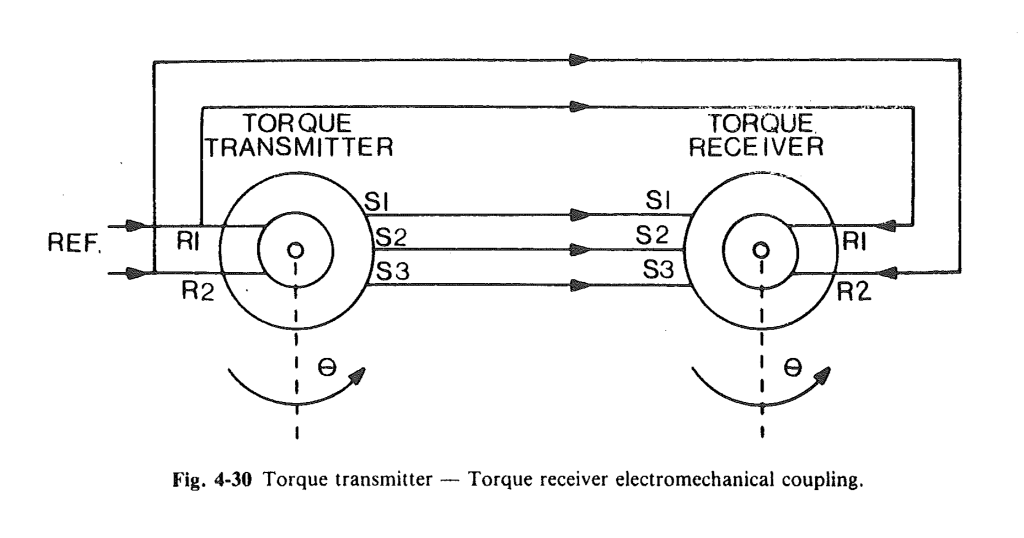
If the transmitter turns 5 degrees, the receiver also turns 5 degrees.
In this case, the indicators show correctly from 0 to about 30 degrees but fail to go beyond 33 degrees. Initially, it was suspected that the issue might be due to the synchro generator and its shaft gears. After further discussions with my friends ETOs, a similar diagnosis was confirmed.
A shore service provider offered advice. Although they had experience, the person handling the case did not fully understand the problem. They checked the report and pictures sent by the ship, and instructed me to check the capacitor connections on the PCB associated with the VDR input in the angle transmitter box. They also incorrectly identified it as a follow-up amplifier.
We had to explain to them that the follow-up amplifier was not related to this issue, its function is not connected to the Rudder Angle Indicator, and how the synchro generator operates.
As often noted, the ship is more knowledgeable about its own problems. When troubleshooting, external advice is based on the report you provide. Even makers sometimes give misleading advice. It is crucial to provide clear and precise reports to ensure accurate understanding on both sides.
After repeated discussions, the CE eventually allow me for further checks. The transmitter synchro generator was removed, and the shaft was manually rotated without finding any errors. It was noticed that the mechanical linkage connecting the rudder stock and transmitter box might be causing the problem.
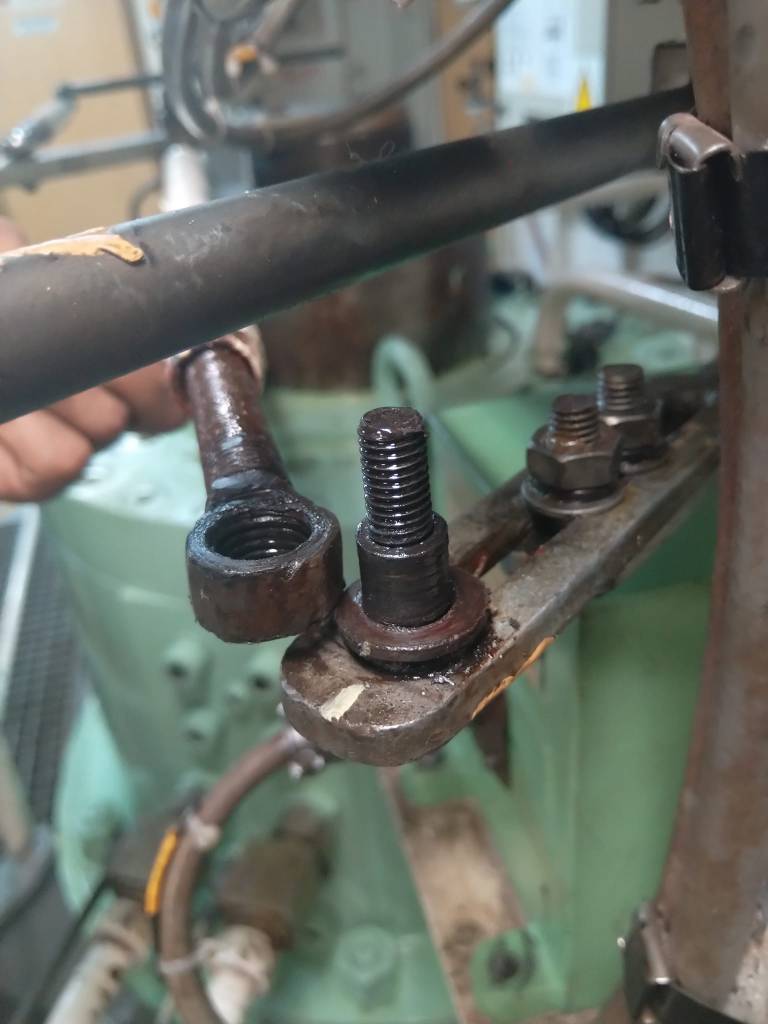
Upon further consultation with the CE and checking the transmitter, it was found that the mechanical link did not allow the transmitter to reach 35 degrees. After adjusting the mechanical linkage, the rudder indicators were able to show up to 35 degrees.
In summary, the initial issue may have been due to a new transmitter box and mechanical linkage not aligning correctly. Misunderstandings and adjustments by subsequent personnel led to complications.
Since everything is now resolved, I have closed the defect and summarized the findings in the Handing Over Notes.
Thank you to all the teachers, inspectors, and colleagues for your assistance.
Kyaw Soe Aung (1900 HR, 5 Oct 2023, Amsterdam)
 ETO Insights
Leave a comment