ACU – Auxiliary Control Unit
ACU က သုံးခု ရှိပါတယ်။ သူက Hydraulic Power Supply Pump ၊ Auxiliary Blower တို့ကို တာဝန်ယူပါတယ်။ Scavenge air pressure ပေါ်မူတည်ပြီး Auxiliary blower start/stop ကို လုပ်ဆောင်ပေးပါတယ်။ ပြီးတော့ Engine driven hydraulic pump တွေရဲ့ Flow control၊ Electric driven pump တွေအတွက် start/stop စတာတွေကို လုပ်ဆောင်ပေးပါတယ်။ တချို့ Engine တွေမှာ Electric driven pump တွေဟာ variable pump အမျိုးအစား ဆိုရင် ACU က အဲဒီ pump တွေရဲ့ swag plate position ကိုပါ control လုပ်ပေးပါတယ်။ ACU ကတ် တစ်ခုတည်းကို pump တွေ blower တွေ စုပြီး ချိတ်ဆက်ထားတာ မလုပ်ဘဲ ကတ် တိုင်းကို အရေအတွက် ညီမျှ အောင် ချိတ်ဆက်ထားပါတယ်။ တကယ်လို့ ACU ကတ် တစ်ခု ပျက်ခဲ့ရင် Engine Operation ကို မထိခိုက်စေဖို့ပါ။
CWCU – Cooling Water Control Unit
ဒီ MPC ကတော့ ME Engine တွေမှာ မပါမဖြစ် မဟုတ်ပါဘူး။ CWCU မှာ LDCL (Load Dependent Cylinder Liner) control system နဲ့ LDHT (Load Dependent High Temperature) control system ဆိုပြီး control process နှစ်ခုရှိပါတယ်။ ကျွန်တော် ခု စီးနေတဲ့ သင်္ဘောမှာတော့ LDCL control process ပဲရှိပါတယ်။
LDCL က cylinder liner မှာ Fuel က Sulphur ကြောင့် ဖြစ်ပေါ်လာတဲ့ cold corrosion ပြဿနာတွေကို လျော့ချ ကန့်သတ်ဖို့ပါ။ Engine Load ၊ Fuel Sulphur Content တို့ကိုမူတည်ပြီး Liner cooling water temperature ကို ထိန်းညှိပေးတာပါ။ Liner ထဲ ပြန်ပြီး re-circulate လုပ်မယ့် Cooling Water နဲ့ Jacket Cooler က လာတဲ့ Jacket water ပမာဏတို့ကို 3 ways Mixing Valve နဲ့ လိုသလို ထိန်းချုပ်ပြီး Liner Cooling
Water ရဲ့ အပူချိန်ကို Control လုပ်တာပါ။ Cooling water စီးအား ကောင်းစေဖို့ Circulation Pump တစ်လုံး တပ်ဆင်ထားပါတယ်။ Liner Cooling Water Temperature နဲ့ Jacket Cooling Water Temperature set point တို့ကို LCDL က တွက်ချက်ပြီး သတ်မှတ် ပေးပါတယ်။
LDHT က LCDL နဲ့ ဆင်တူပါပဲ။ LCDL က Liner cooling water temperature ကိုပဲ control လုပ်ပြီးတော့ LDHT က Engine တစ်ခုလုံးရဲ့ Jacket Water Temperature ကို Engine Load၊ Sulphur Content တို့ကို မူတည်ပြီး ကွပ်ကဲပေးတာပါ။


SCU- Scavenge Air Control Unit
SCU က Scavenge air pressure ကို ထိန်းညှိဖို့ပါ။ Exhaust Gas Bypass (EGB) Valve ရဲ့ Position ကို သူက တာဝန်ယူဆောင်ရွက်ပါတယ်။ Variable Turbocharger (VT) ပါရင် သူ့ကိုပါ Control လုပ်ပါတယ်။ Exhaust Gas Bypass Valve (EGB) က Exhaust Gas ကို Turbo Charger ထဲ မသွားစေဘဲ Turbo Charger Exhaust Outlet ဆီ တန်းပို့ပေးတာပါ။ သူ့ကို လိုသလို အဖွင့်အပိတ် လုပ်ပြီး Scavenge Air Pressure ကို ထိန်းညှိတာပါ။ TIER III မှာ သူက ERCS MPC (Emission Reduction Control System) နဲ့ တွဲဖက်ပြီး Exhaust gas temperature ကို ထိန်းညှိဖို့ လုပ်ဆောင်ရာမှာ အကူအညီ ပေး ပါတယ်။


တချို့ Engine တွေမှာ SCU က EGB Valve အပြင် Various Waste Heat Recovery (WHR) system ကိုပါ Control လုပ်တယ်လို့ သိရပါတယ်။ WHR ဆိုတာက Engine က စွန့်ထုတ်လိုက်တဲ့ အပူ တွေကို အလဟဿ မဖြစ်ရအောင် ပြန်လည် အသုံးချတဲ့ စနစ်ပါ။ မြင်သာအောင် ပြောရရင် Economizer ပဲ ဖြစ်ပါတယ်။ Engine ထုတ်လုပ်သူတွေက Fuel consumption သက်သာအောင် ၊ Emission ကို ကောင်းကောင်းလျော့ချ နိုင်အောင် ကြိုးစားနေကြပါတယ်။ MAN B&W ရဲ့ WHR system Design က Economizer က steam turbine နဲ့ Exhaust Gas Flowနဲ့ လည်တဲ့ Power Turbine တို့ကို ပေါင်းစပ်ပြီး Electric Power ပြန်ထုတ်ဖို့အထိ လုပ်ထားတာ တွေ့ရပါတယ်။

MPCs for SCR and EGR- Emission Reduction Control System
SCR (Selective Catalyst Reactor) နဲ့ Exhaust Gas Recirculation တို့က Main Engine Control System မှာ Emission Reduction Control System အတွက် ထပ်တိုးပြီး ထပ်တိုး တပ်ဆင်လာကြတဲ့ နည်းပညာနှစ်မျိုး ဖြစ်ပါတယ်။ သူတို့အတွက် Controller ကို MPC သုံးတတ်ပါတယ်။ သပ်သပ် MOP လည်း ခွဲထားပါတယ်။
သူတို့နဲ့ သက်ဆိုင်တဲ့ Valves တွေ ကို Operate and control လုပ်ဖို့ Control Unit MPC တစ်ခု၊ Interface အတွက် MPC တစ်ခုစီ ရှိတတ်ကြပါတယ်။
SCR နဲ့ EGR အကြောင်း နောက်မှာ ထပ်ရှင်းပါ့မယ်။
EMS – Engine Management Service
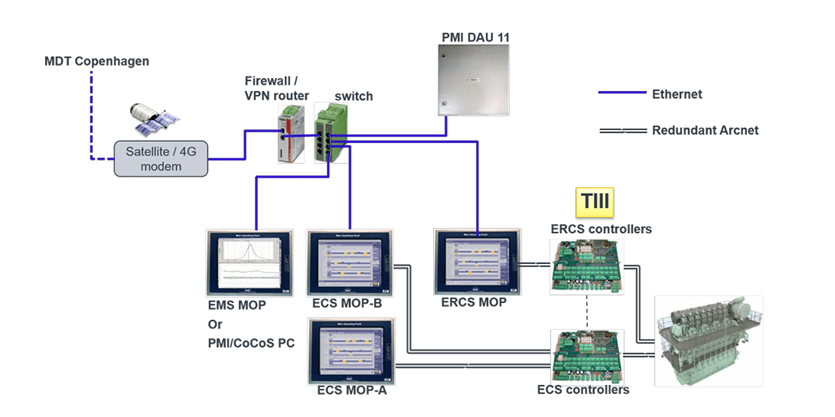
EMS မှာ PMI online system, ACCo, CoCs-EDS တို့ ပါဝင်ပါတယ်။
PMS – Pressure Measurement System
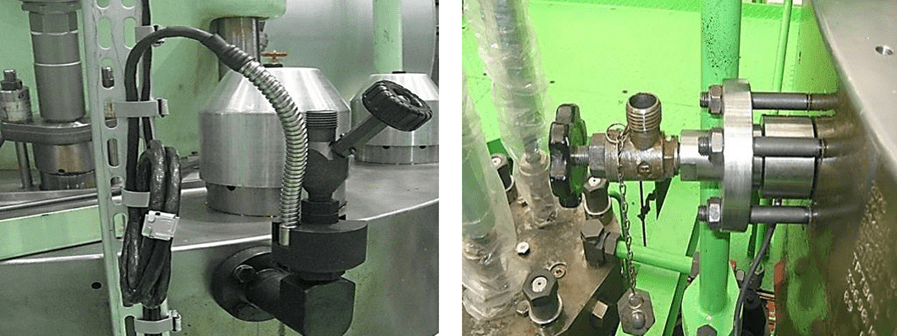
Cylinder Unit တွေ တစ်ခုချင်းစီရဲ့ Indicator cock တွေမှာ pressure sensor တွေ တပ်ဆင်ထားပြီး combustion process တလျှောက် pressure ကို တိုင်းယူပါတယ်။ Pressure sensor အနေနဲ့ Kistler က ထုတ်တဲ့ဟာနဲ့ ABB က ထုတ်တာ သုံးပါတယ်။ Kistler က piezoelectric sensor အမျိုးအစား ဖြစ်ပါတယ်။ piezoelectric sensor က သူ့အပေါ် pressure သက်ရောက်တဲ့အခါ အနည်းငယ် ပုံစံပျက်ယွင်းပြီး အဲဒီကနေ Electric charge တွေ အပြောင်းအလဲ ဖြစ်စေတာပါ။ အဲဒီ electric charge ပြောင်းလဲ မှုက ရလာတဲ့ Electrical signal ကို processing and amplifying လုပ်ပြီး pressure တန်ဖိုးကို တွက်ယူတာပါ။ Kistler pressure sensor ရဲ့ သက်တမ်းက လေးနှစ် လောက်ပဲရှိတယ်လို့သိရပါတယ်။ အားနည်းချက်တခုက indicator cock ကို Engine running condition မှာ ဖွင့်မိရင် sensor က အပူချိန် သက်ရောက်မှုကြောင့် ပျက်စီးနိုင်တာပါ။
ABB ရဲ့ sensor က တော့ Magnetic elastic type ဖြစ်ပါတယ်။ cylinder pressure ကြောင့် sensing material မှာ ကျုံ့တာ ဆန့်တာ ဖြစ်လာပြီး Magnetic field ပြောင်းလဲမှု ဖြစ်လာပါတယ်။ အဲဒီကတဆင့် pressure ကို တိုင်းတာ တာ ဖြစ်ပါတယ်။ သူ့က Kistler ထက် စျေးပိုကြီးသလို sensor သက်တမ်းက လည်း ဆယ်နှစ် ဝန်းကျင်ရှိပါတယ်။
Cylinder unit အသီးသီးက sensor တွေက တိုင်းလို့ရတာ၊ Tacho system က ပေးပို့တဲ့ crank shaft angle position ၊ Engine RPM sensor စတာတွေကို DAU – Data Acquisition Unit က ရယူပါတယ်။ DAU ကတဆင့် PMI computer ကို LAN နဲ့ ပို့ပေးတာ ဖြစ်ပါတယ်။


PMI system က အရေးပါတဲ့ parameter တွေ ဖြစ်တဲ့ engine unit တစ်ခုချင်းစီရဲ့ p(i), p(comp), p(max) တို့ကို အချိန်နဲ့ တပြေးညီ အမြဲမပြတ် အလွယ်တကူ စောင့်ကြည့်လို့ ရအောင် စီမံပေးတာပါ။ ဒါကြောင့် Operator အနေနဲ့ အဲဒီ တန်ဖိုးတွေကို ကြည့်ပြီး ကိုယ့် Engine performance ကို အမြဲ စောင့်ကြည့် နိုင်သလို လိုအပ်သလို ထိန်းညှိမှုတွေ လုပ်ဆောင်ဖို့ ဆုံးဖြတ်ရာမှာလည်း ပိုမို လွယ်ကူလာစေပါတယ်။
ACCo – Adaptive Cylinder Control
ACCo က PMI system က ရရှိတဲ့ data တွေ ကို analyze လုပ်ပြီး Engine performance ကို အမြဲ Tuning ချိန်ညှိပေးနေတဲ့ algorithm တစ်ခု ဖြစ်ပါတယ်။ သူက Engine performance ကောင်းအောင် fuel injection profile , Exhaust valve timing စ တာတွေကို တွက်ထုတ်ပြီး Engine Control System ကို ပေးပို့တာပါ။ MOP B နဲ့ တွဲဖက်ပြီး လုပ်ဆောင်ပါတယ်။

CoCoS -EDS (Computer Controlled Surveillance- Engine Diagnostic System)
CoCos က Engine ရဲ့ Performance data တွေကို အသေးစိတ်တွက်ချက်ပြီး operator ကို Engine ပြဿနာတွေ ဖြေရှင်းရာမှာ ကူညီတဲ့ program ဖြစ်ပါတယ်။ cylinder pressure and crank angle,, combustion pressure, exhaust gas temperature, Fuel injection timing, Engine load diagram စတာတွေကို ပြည့်ပြည့်စုံစုံ Graph နဲ့ trend တွေ အဖြစ် real time monitoring လုပ် လို့ရပြီး operator အနေနဲ့ ကိုယ့် engine ကို ကောင်းစွာ ထိန်းချုပ်နိုင်မှာဖြစ်ပါတယ်။
References
1) Hyundai-Man B&W Diesel Engine Main Engine Manual Volume II
2) MAN Diesel PrimeServ Academy
(This overview of ME Engine Control Systems is intended solely for educational purposes and knowledge sharing. It is not designed for commercial publication or professional use. The information provided aims to offer a general introduction to ME Engine Control Systems for those unfamiliar with the topic.
Please be aware that this overview is based on specific ME engines encountered and reflects current technology as of the date of writing. Due to the evolving nature of technology, there may be gaps, discrepancies, or inaccuracies in the information presented.
For the most accurate and up-to-date information, further research and consultation with industry experts are recommended. Corrections, additional insights, and feedback from the community are welcome to enhance the accuracy and usefulness of this material.)
 ETO Insights
Leave a comment