I haven’t encountered an MGO pump powered by pneumatics before; this was my first time seeing one. Previously, I’ve only used electric motor-driven MGO flushing pumps. These pumps get their power from the ESB and are used to supply MGO in case of a blackout, ensuring that the standby generator can be started.
The pneumatic pump was something new to me when I arrived on this ship. I didn’t pay much attention to it until I had to check it during a specific situation.
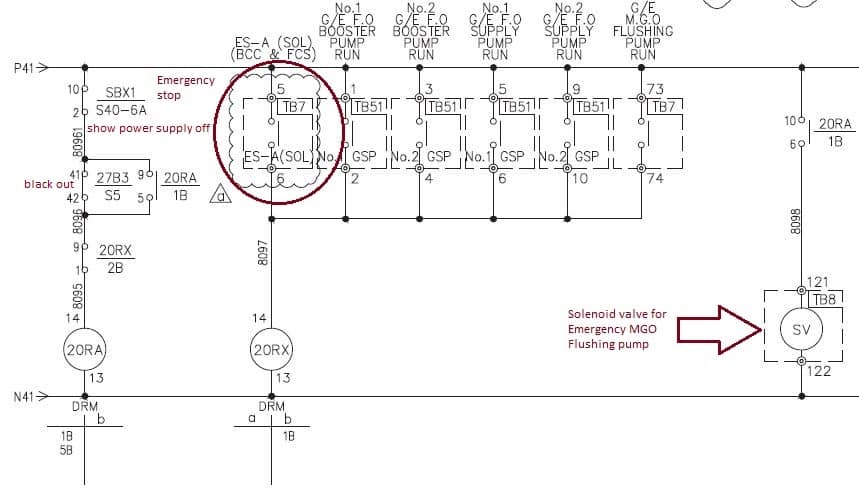
The arrangement isn’t too unusual. The pneumatic pump supplies MGO to the generator engines. There is a 24VDC solenoid valve in the air supply line. This solenoid receives power from the emergency DC power supply. If a blackout occurs, and the FO booster pumps and FO supply pumps are not running, and there is no shore power, the emergency DC power supply will activate the solenoid to open the air line for the pneumatic pump. If the solenoid doesn’t open, there is a bypass line to manually open it.
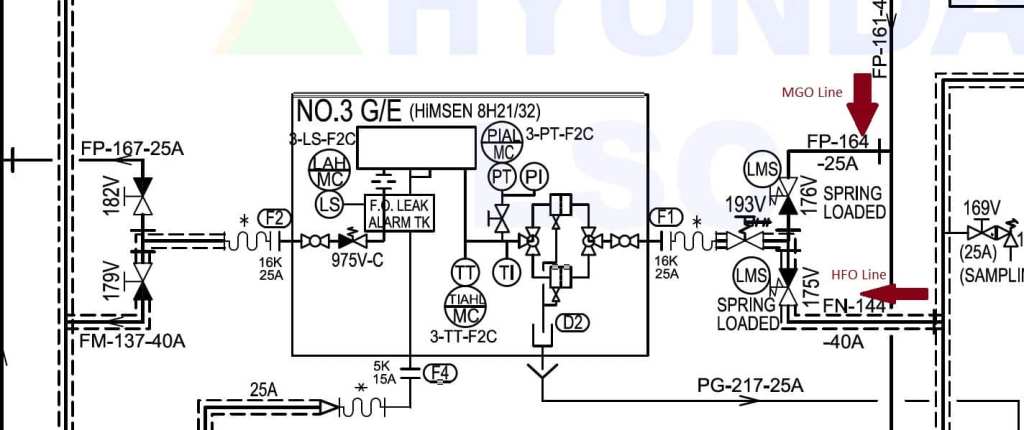
One important thing to note is the MGO supply line to the generator engines. Typically, MGO is used for starting and stopping the engines to prevent clogging of the nozzles by HFO. However, some engines are equipped with an HFO circulation line in the nozzles, making MGO unnecessary during start and stop operations. In these cases, HFO is used throughout. Additionally, if the non-return valves in the MGO and HFO lines are not secure, there is a risk of HFO entering the MGO line. To prevent this, manual valves are often used to secure the lines.
Therefore, if the running generator stops and a blackout occurs, and the standby generator is restarted, if the HFO supply pump doesn’t start immediately, the HFO pressure might not be sufficient, leading to another potential blackout. This is something to be cautious about.
For testing the solenoid, the circuit is located in the MSB synchro panel on my ship. You can test it by bypassing the relay contact. If you prefer not to bypass the relay in the synchronization panel, you can directly supply 24V DC to the solenoid to test it.
Looking at the diagram should make things clearer. It’s easy to overlook these details if they are not part of your checklist.
 ETO Insights
Leave a comment