220V and 440V are commonly encountered on most vessels, but I have only experienced 24VDC a few times. One of the incidents involved the power supply module for the cylinder lubricator. There are two power supply modules—a main and a backup—with the 24VDC distribution panel supplying power. The backup supply unit was involved. Since the PCB was experiencing low insulation, it needs to be replaced with a new one.The next incident I encountered was with the ship’s clock system. At that time, the clocks had also stopped, making it easy to identify the low insulation issue.
This time, the issue took a while to resolve due to its complexity. As per the usual procedure for locating low insulation, I started by cutting power to non-critical systems in the 24VDC panel, such as the auto telephone system and PA system, to eliminate them as potential sources of the problem.
Nothing unusual was found, and since the vessel was at anchor, I disconnected the navigation equipment and the CCR console. However, there was no change.Eventually, the only thing left was the ECR console. I couldn’t just pull the fuse out like that, so I went to the ECR console and started removing the fuses one by one to check for any issues.
I requested the ship’s staff to monitor the insulation meter on the bridge while I removed the fuses one by one from the ECR console. Since the remote control panel for the No. 3 Main Cooling Seawater Pump receives power from the ECR, I decided to check the seawater pump first.
The generators also draw power from the ECR console, so I switched the generators to manual mode. I removed each remaining fuse, except for the terminal box of the running generator. I then asked the ship’s staff for results via radio, nothing unusual was found. Even after switching the generators, removing the remaining fuses didn’t reveal any issues.
Searching for low insulation feels a bit like searching for lost gold—everyone starts to suspect foul play. When I review the drawings, everything I see raises even more doubts and concerns for me.
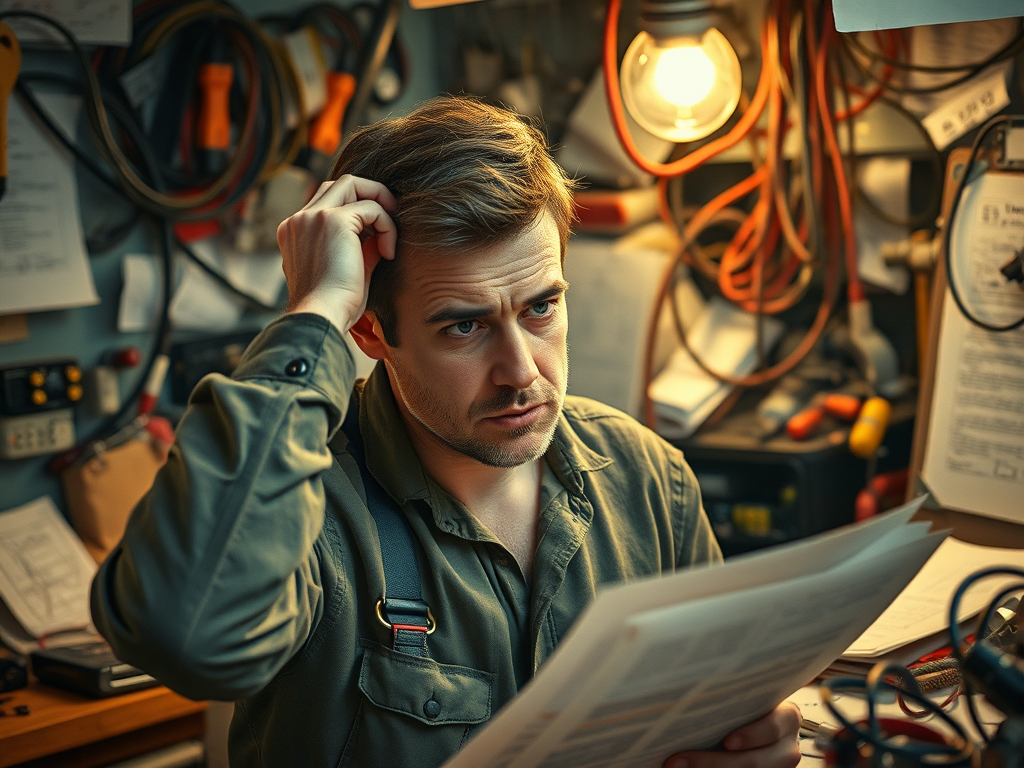
In the end, since I couldn’t find the issue, I also tested the insulation meter itself. The earth lamp was indicating low, so the meter wasn’t faulty. I tried disconnecting the main power and battery power one at a time, but still didn’t find anything unusual.
In the end, with not much left to check, I decided to disconnect everything except for the 24VDC source from the running generator. I removed everything I could from the ECR console, and as I started disconnecting from the 24VDC panel, I was relieved to see that the insulation was back to normal!
I’m not sure if it was the ship’s staff who was misobserving while I was removing the fuses from the ECR, or if I was just too quick in putting them back. It’s only now that I’m realizing what I didn’t find earlier. As I reinstalled each fuse, it turned out that the stopped Generator No. 2 was the source of the issue.
The 24VDC supply from the panel goes into the main interface PCB of Generator No. 2. From there, it powers the speed monitoring unit, A/D unit, and other components. After disconnecting the speed monitoring unit and A/D unit, I noticed that even when left alone, the ground issue persisted. I informed the CE that the main interface PCB was experiencing low insulation.
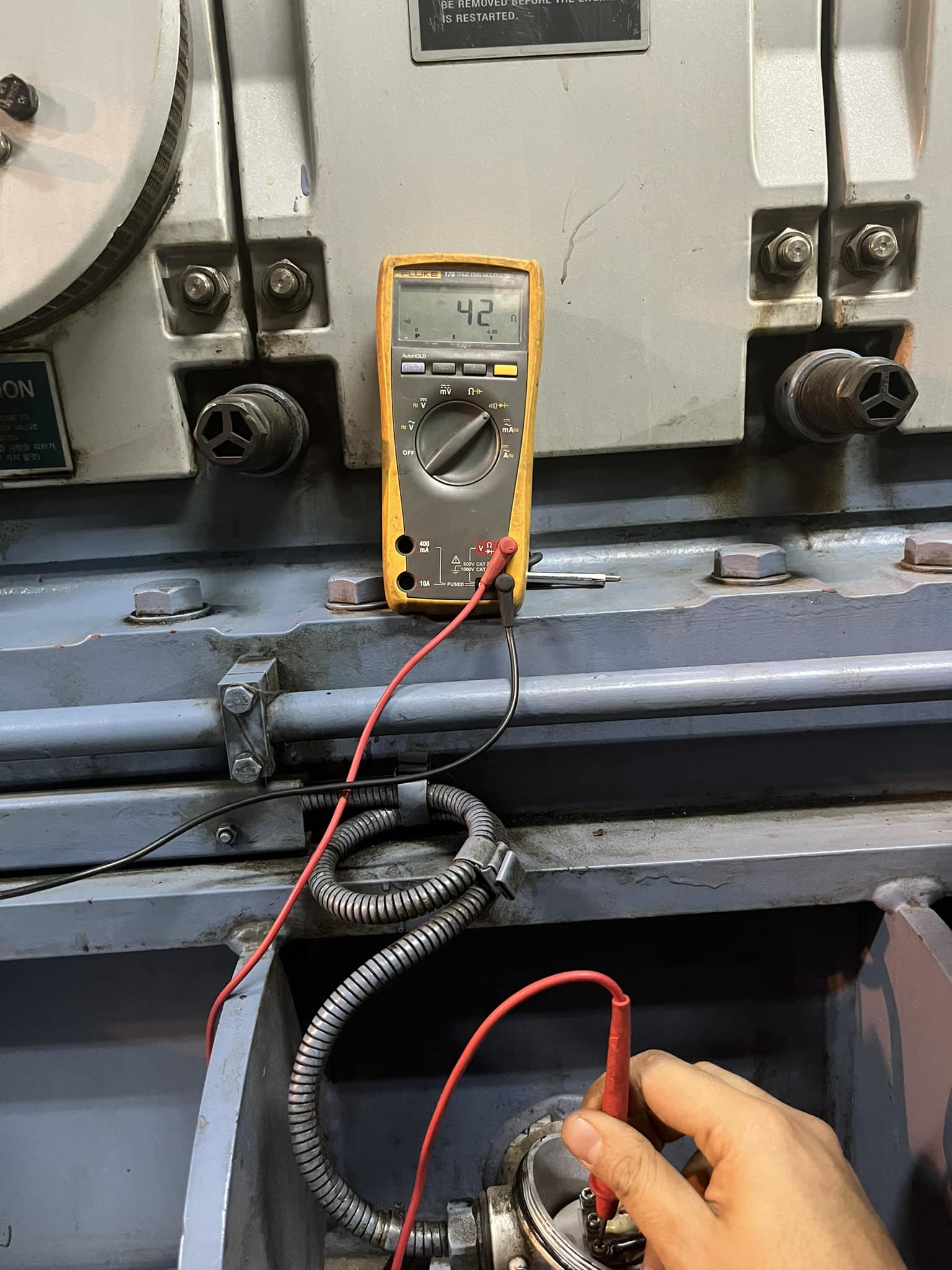
While both the CE and I were wrapping up our report and taking a break, I remembered that there were sensors and switches connected to that PCB. It occurred to me that the grounding issue could also be on the sensor side. I suggested to the CE to give us a little more time, and we proceeded to disconnect each sensor to measure their ground and resistance. That’s when we discovered that the level switch for the lube oil sump tank was grounding out.
Finding the solution was a relief, but I knew we needed to be careful. If we rushed to install a new PCB without proper checks, it could lead to bigger problems.
Before this issue, I had a conversation with a Filipino EO I used to work with during my cadet days. While searching for low insulation at 220V with him, I accidentally caused a blackout due to my haste. He reminded me again not to make quick decisions and to stay vigilant.
The grounding issue with the sensor was due to the reed switch cable itself.


I appreciate learning from more experienced colleagues and mentors, so if anyone has additional insights or suggestions, please feel free to share!
Kyaw Soe Aung
December 30,2022 , Castellon, Spain

 ETO Insights
Leave a comment