Introduction
The Sound Reception System (SRS), commonly known among seafarers as “Elephant Ears,” is installed on totally enclosed bridges in accordance with SOLAS and COLREGs requirements. Since modern bridge designs are enclosed to improve safety and working conditions, natural external sounds such as whistles, fog signals, and other vessels’ warnings cannot be heard directly. The Sound Reception System solves this problem by electronically capturing outside sounds and reproducing them inside the bridge, ensuring that watchkeepers remain aware of surrounding sound signals.

System Arrangement
The system typically consists of microphone units mounted outside the bridge structure, often on the compass deck or bridge top, where sound can be received clearly from all directions. Inside the bridge, speakers reproduce the received sound, while directional indicator units show the bearing from which the sound originates. This combination allows bridge personnel not only to hear the signal but also to understand its direction, which is critical during restricted visibility.
System Testing
To verify proper operation, several testing methods may be provided depending on the system design. Some installations include a hand-operated forge bellows, which generates a controlled test sound by manually squeezing air. Others may be fitted with a built-in test tone generator. If neither is available, the ship’s whistle can be used as an alternative sound source. However, during normal operation, the SRS may also pick up sounds from the vessel’s own whistle, PA system, or internal alarms. To prevent confusion, systems are often designed with a muting arrangement. When the whistle is activated, a contact closes and temporarily mutes the SRS. Therefore, if testing with the ship’s whistle, this muting contact must be temporarily isolated. This arrangement is not standardized and varies between manufacturers.
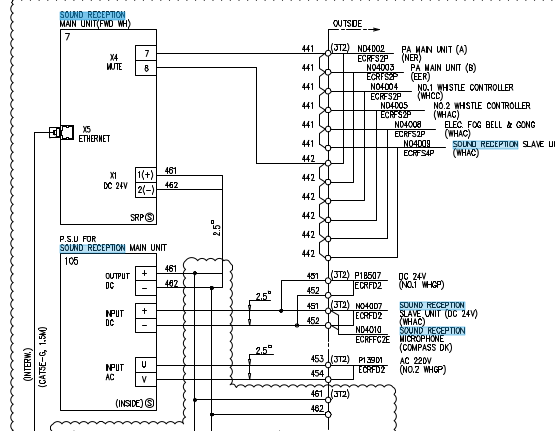
Troubleshooting on the Present Vessel
During routine testing on the present vessel, the Sound Reception System was found not functioning. Unlike previously encountered analog systems, this installation was a network-based type. The microphone unit was installed on the compass deck above the bridge, while two speaker and indicator units were located on the bridge console. All components were connected through a PoE (Power over Ethernet) switch.
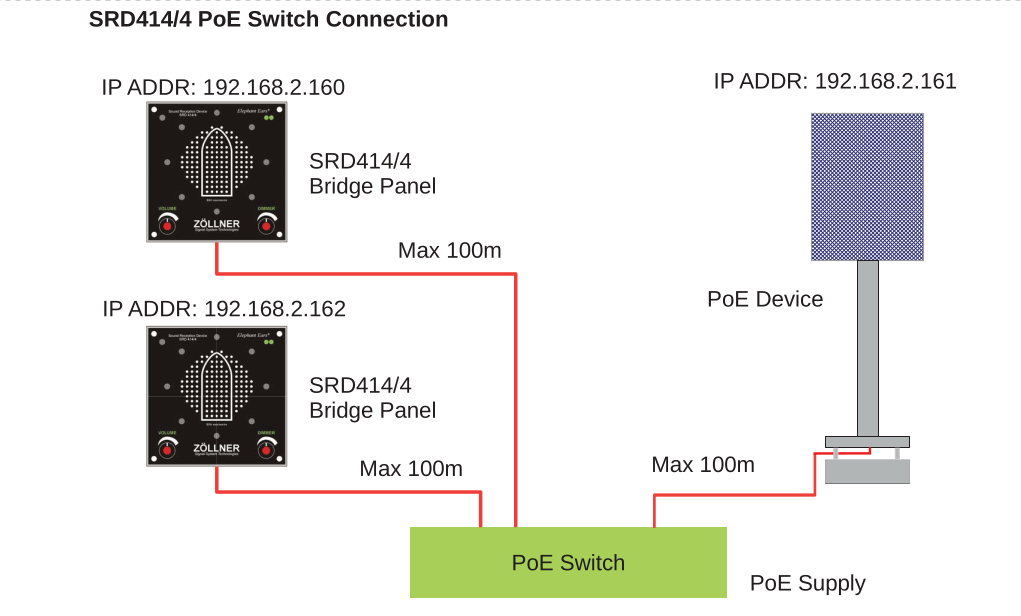
Since the IP addresses of the devices were known, a computer was connected to the PoE switch and a ping test was performed. The two indicator units responded normally, but the microphone unit did not respond. To rule out a cabling problem, the LAN cable connected to the microphone unit was checked and found to be in good condition. Based on these checks, the fault was determined to be a defective microphone unit.

Related System: FOG Bell System
Another important system used in restricted visibility is the FOG Bell System (Ship’s Bell Signalling System). While the Sound Reception System receives sound signals from outside the vessel, the FOG Bell System is used to send sound signals from the vessel to others, particularly when at anchor or in fog conditions, as required by COLREGs.
Conclusion
Both the Sound Reception System and the FOG Bell System are essential navigational safety systems. Proper understanding, routine testing, and effective troubleshooting are necessary to ensure reliable operation, especially when visibility is poor and sound signals become a primary means of awareness.
Note
This article is shared for experience-sharing purposes only. For detailed technical diagnosis, repairs, or system modifications, consultation with the equipment manufacturer or a qualified marine electronics specialist is recommended.
 ETO Insights
Leave a comment