Among all the 440V low insulation faults I’ve encountered, this case was quite unique. When the 440V insulation dropped all the way down to zero, I carried out the usual troubleshooting steps—tripping available breakers, shifting loads like pumps, and isolating circuits one by one—but I couldn’t locate the fault initially. Eventually, the issue was traced to the UV sterilizer unit. I had previously heard that on sister ships, similar faults were caused either by the UV sterilizer lamp or sometimes by a 220V solenoid, but it raised an important question: how could a fault on a 220V source result in a 440V low insulation reading?
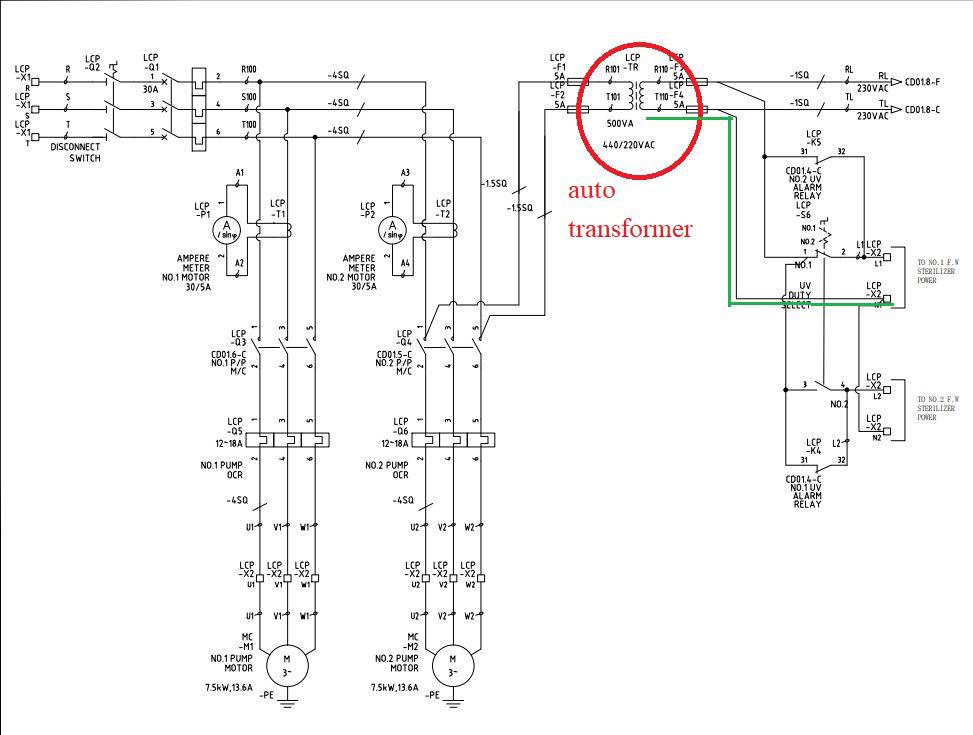
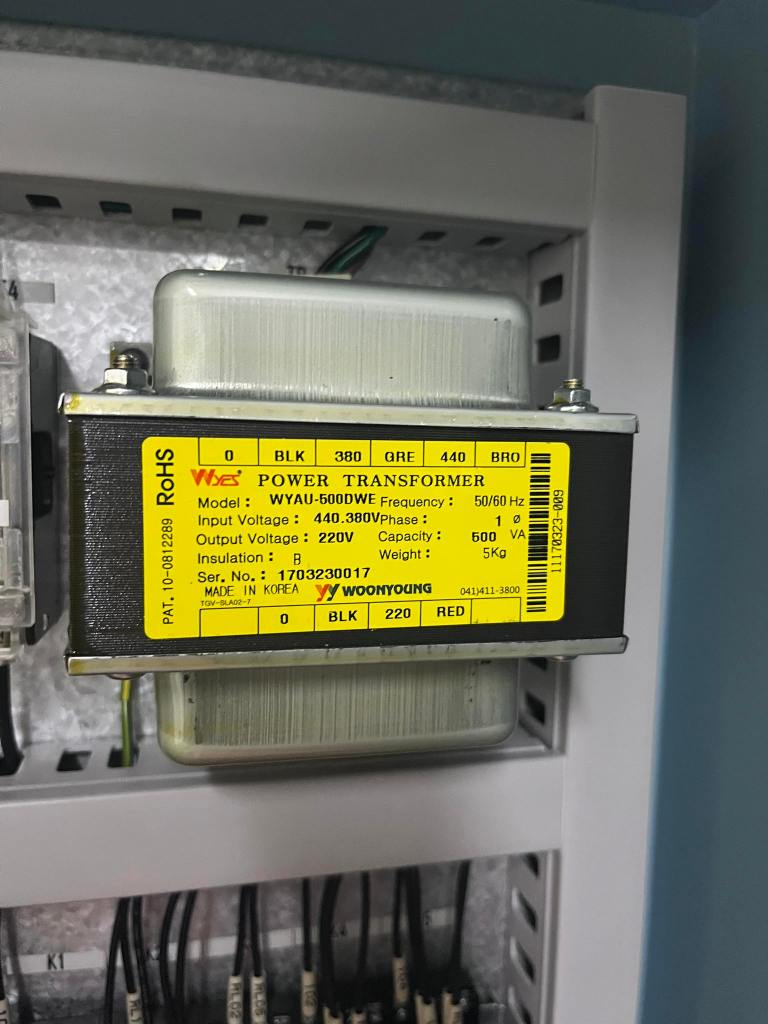
After reviewing the circuit, I discovered that instead of using a standard two-winding step-down transformer, an auto transformer was installed to supply 220V for the UV lamp and control power. Because an auto transformer does not provide electrical isolation between primary and secondary, the 220V side is effectively connected to the 440V system. As a result, a ground fault on the 220V side was being detected by the 440V insulation resistance meter.
Even after switching off the UV unit, the insulation value did not recover, which led me to recheck the drawings. It turned out that the UV unit’s source switch was only disconnecting one phase, meaning the circuit was not fully isolated and the fault path still remained. Once both incoming power fuses were removed, the insulation returned to normal.
This case clearly shows that in systems using auto transformers, a fault on the 220V side can appear as a 440V insulation fault, and that single-phase isolation is not sufficient for proper fault clearing.
 ETO Insights
Leave a comment